Home Theater California Building Permits: What Triggers One and What Doesn't
California's building permit requirements for home theater projects follow a clear logic once you understand it: permits follow trades and structure, not equipment. Drop a projector and speakers into an existing room without touching the walls or the electrical panel, and you have nothing to permit. Start adding circuits, framing walls, or converting a garage, and you're in permit territory at every step.
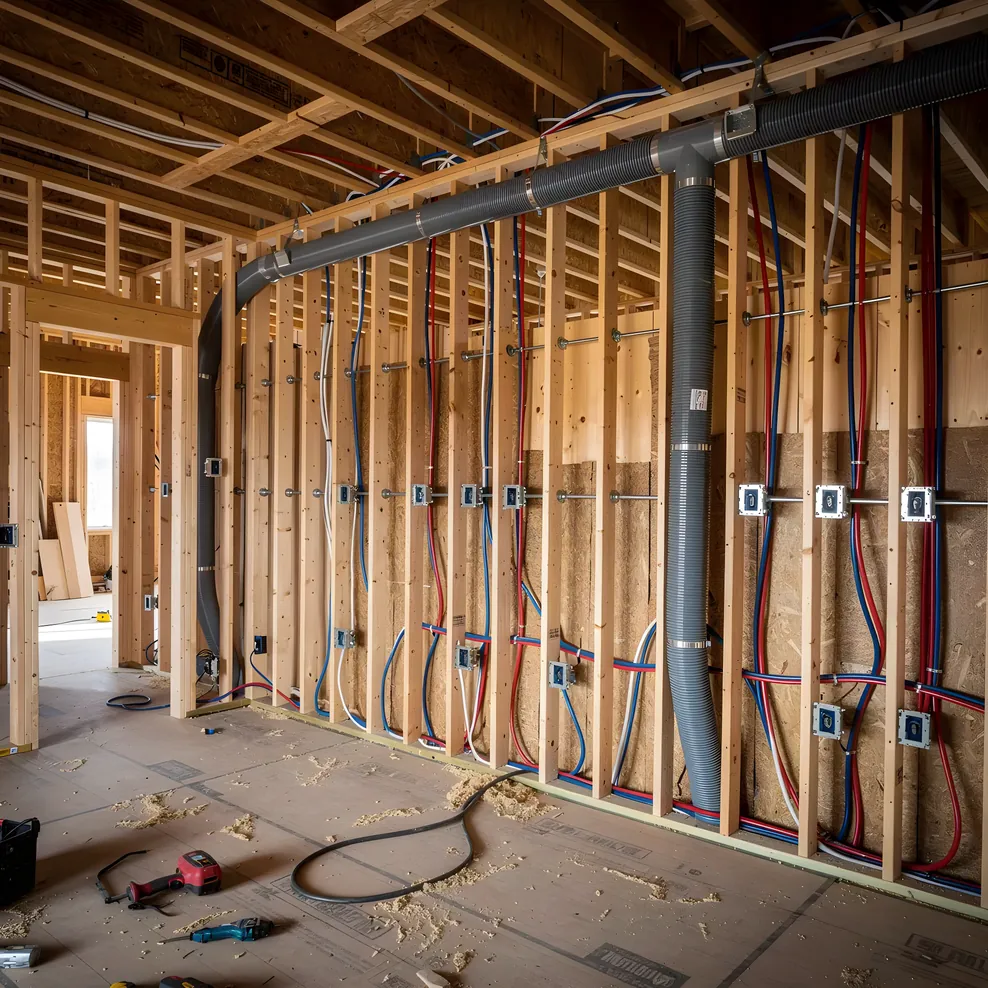
This guide covers what actually triggers a permit, what's exempt, how California's Title 24 energy code fits in, and what the process looks like across the Bay Area's main counties.
The Basic Framework: What California Requires Permits For
California's building permit requirements derive from the California Building Code (CBC) and California Electrical Code (CEC), both of which are adopted and locally administered by individual counties and cities. The triggers for a home theater project are fairly predictable.
Electrical permits are required whenever you add new circuits, add a subpanel, upgrade your main panel, or install new outlet locations. In a home theater context, this is the most common permit situation. A dedicated 20-amp circuit for AV equipment requires an electrical permit and, in nearly all Bay Area jurisdictions, must be done by a licensed electrician or a homeowner pulling an owner-builder permit for their primary residence.
Building permits apply when you're making structural changes. Framing a new wall, converting a garage into a conditioned living space, adding a door or window opening, or creating a dedicated darkened room within a larger space all fall under building permit requirements. The type of permit and the inspection process depend on the scope.
HVAC permits come into play when you're adding or modifying heating and cooling for the room. A dedicated theater room in a garage conversion almost always requires HVAC work, which requires its own permit and a licensed contractor.
The key point for planning: a project that touches more than one trade (electrical plus framing, for example) typically requires multiple separate permits, not a single combined one.
What Does Not Require a Permit
The no-permit category for home theater work is larger than most homeowners expect.
Installing AV equipment in an existing room with existing outlets and circuits requires no permit. That includes projectors, receivers, speakers, streaming devices, media players, and screens. Running speaker wire through walls when those runs are low-voltage signal cable (typically below 50 volts) is also generally exempt in California, though some counties require the contractor doing the work to hold a low-voltage registration.
Swapping out a light fixture for a dimmable equivalent, or adding a plug-in dimmer to an existing outlet circuit, does not require a permit. Painting, acoustic panel installation, carpet installation, and furniture placement all fall outside permit requirements entirely.
The clear line: if you're not adding circuits, moving walls, or changing the room's footprint in a way that affects conditioned space, you almost certainly don't need a permit.
Electrical Permits in Detail
For most Bay Area home theater projects that involve any electrical work beyond what's already in the room, an electrical permit is the most relevant document.
A dedicated circuit requires a permit because it involves new work in the panel, new wiring through walls and ceilings, and a new outlet or connection point in the room. The inspector will want to see the wiring method, the circuit protection (breaker rating), and that the outlet is installed correctly. In older Bay Area homes with 100-amp panels, this inspection also often surfaces the panel capacity question before it becomes a budget surprise.
Panel upgrades, from 100-amp to 200-amp service, are their own permit process and typically involve coordination with PG&E for utility-side work, in addition to the permit from the local building department. These are straightforward but take longer than a simple circuit permit: allow three to six weeks from permit application to final inspection approval in most Bay Area jurisdictions.
The practical advice: if your project involves any electrical work at all, hire a licensed electrician and let them pull the permit. Permit costs in California are typically calculated as a percentage of the project value or as a flat fee per circuit, and they're modest relative to the labor cost. The electrician's familiarity with the local inspector speeds the process.
California Title 24 Energy Compliance
Title 24, California's Building Energy Efficiency Standards, applies when a project pulls a building permit that includes work on lighting, HVAC, or insulation. For home theaters, the most common trigger is a garage conversion or a permitted room buildout that includes new recessed lighting, a mini-split system, or new insulation in the walls and ceiling.
When Title 24 applies, it requires documentation showing that new lighting meets efficacy standards (typically LED), that any new HVAC equipment meets minimum efficiency ratings, and that insulation R-values meet current California requirements for the climate zone.
In practice, a well-designed home theater room has lighting that easily meets Title 24 standards (dimmable LED fixtures are standard and compliant) and benefits from good insulation for acoustic reasons as much as energy reasons. Title 24 rarely creates meaningful design constraints for theater rooms; it's more of a documentation and inspection step.
If your project involves only an electrical permit for new circuits and no structural or HVAC work, Title 24 does not apply.
Low-Voltage Exemptions
California gives separate treatment to low-voltage systems, which is the category that covers most of the wiring in a home cinema beyond the power circuits: speaker cable, HDMI and video signal cable, Cat6 for network-connected components, IR (infrared) control wiring, and similar signal-only runs.
Low-voltage wiring operating below 50 volts is exempt from the standard electrical permit requirement in California. Contractors installing these systems are required to hold a C-7 low-voltage systems contractor license, but the permit process for the wiring itself is typically waived.
The exemption is significant for Bay Area projects because it means the substantial amount of structured wiring that goes into a properly installed home cinema, often hundreds of feet of cable through walls, ceilings, and conduit, doesn't add to the permit list or the inspection schedule.
Bay Area County Permit Offices and Timelines
Permit administration in California is county and city-level, not state-level. The Bay Area counties each have their own processes, fee structures, and timelines. The variation is real and worth knowing before you plan your project schedule.
San Francisco has one of the more complex permit processes in the state. The San Francisco Department of Building Inspection handles both building and electrical permits. Simple electrical permits for one or two circuits may be approved over the counter, but anything requiring plan review can take four to eight weeks and sometimes longer.
Alameda County cities (Oakland, Berkeley, Fremont, and others each have their own building departments) vary in speed. Oakland has historically run slower than suburban Alameda County cities. Electrical permits for straightforward circuit additions typically take two to three weeks.
Santa Clara County cities (San Jose, Palo Alto, Sunnyvale) are generally efficient. San Jose's building department offers online permit applications and has improved turnaround times. Simple electrical permits often approve in one to two weeks; building permits for room conversions typically take four to six weeks.
Contra Costa County (Walnut Creek, Concord, Pleasant Hill) tends to be faster than the urban core. Electrical permits for standard circuit additions typically approve in one to two weeks.
Marin County has a reputation for thorough review, particularly for anything involving structural work or garage conversions in areas with fire-safe building requirements. Allow six to eight weeks for building permits and confirm early whether your project triggers any fire-safe roofing or siding review in high-risk zones.
For all counties: a contractor who regularly pulls permits in a given jurisdiction will almost always move faster than an unfamiliar contractor. This local knowledge is one of the less-obvious advantages of working with Bay Area-based AV integrators who handle permitted work regularly.
Planning Permits Into Your Project
Permits affect project timelines in ways that catch homeowners off guard when they aren't planned from the start. A garage conversion that requires both a building permit and an electrical permit may have a four-to-six-week permit approval window before any physical work can begin. Adding that time to your project schedule before finalizing a start date with your contractor prevents the situation where you've committed to a timeline that physically cannot work.
The other timing consideration is inspection sequencing. Electrical work requires a rough-in inspection before walls are closed. If your project involves framing and drywall, you need to schedule the rough electrical inspection at the right point in the construction sequence, or you'll be opening walls after closing them.
The Bay Area home theater guide covers the broader picture of what makes Bay Area projects different from national guides. For the electrical side specifically, the home theater electrical panel guide goes deeper on panel capacity assessment and the upgrade process. If you're working in a pre-1970 home where the room conversion complexity runs high, the guide to home theaters in older Bay Area homes covers the specific challenges of plaster walls, original hardwood floors, and older framing.
Understanding the permit requirements before talking to contractors also gives you a more accurate budget picture. The home theater cost guide includes permit fees and licensed-contractor requirements in its Bay Area cost breakdown.
For questions about room design independent of the permit process, the home theater design guides cover layout planning, acoustic treatment, dimensions, and equipment selection without the contractor-facing complexity of permitted construction.
When you're ready to connect with local installers experienced in Bay Area permitted work, bayareaavpros.com lists specialists across the East Bay, Peninsula, Marin, South Bay, and San Francisco who handle the full scope from room design through permitted construction.
Common Questions About Home Theater Permits in California
Do I need a permit to install a home theater in California? If you are only adding AV equipment to an existing room with no new walls, no new circuits, and no structural changes, you do not need a permit. Permits apply when you add circuits, upgrade your panel, frame new walls, convert a garage, or make any structural changes to the space.
Do low-voltage wiring runs for speakers and HDMI need a permit in California? In most California jurisdictions, low-voltage wiring (speaker cable, HDMI, Cat6, IR control) does not require a permit when run inside an existing finished room. Some counties require the contractor to hold a low-voltage license, but the permit itself is typically waived for signal-only wiring under 50 volts.
What is California Title 24 and does it apply to home theaters? Title 24 is California's Building Energy Efficiency Standards, governing lighting, HVAC, and insulation. It applies when a project pulls a building permit that includes new or altered lighting circuits, HVAC, or insulation. An equipment-only swap in an existing room does not trigger Title 24.
How long does it take to get a home theater permit in the Bay Area? Simple electrical permits for one or two new circuits typically take one to three weeks in most Bay Area counties. Building permits for structural work or room conversions take four to eight weeks, and can run longer in San Francisco and Marin.
Can I do electrical work for my home theater myself in California? California allows homeowners to pull electrical permits for their own primary residence. You can legally do the wiring yourself, schedule inspections, and have the work approved without a licensed electrician. That said, most Bay Area homeowners find hiring a licensed electrician is worth it, given what re-doing improper work costs in this labor market.
What happens if I do home theater construction without a permit in California? Unpermitted structural or electrical work creates risk at home sale (where it must be disclosed and may require retroactive permitting or a price reduction) and with insurance claims (where coverage for damage originating in an unpermitted space may be reduced or voided). The risk is real and varies by county and scope of the work.
For the complete Bay Area home theater planning guide collection, visit Bay Area Home Cinema.